

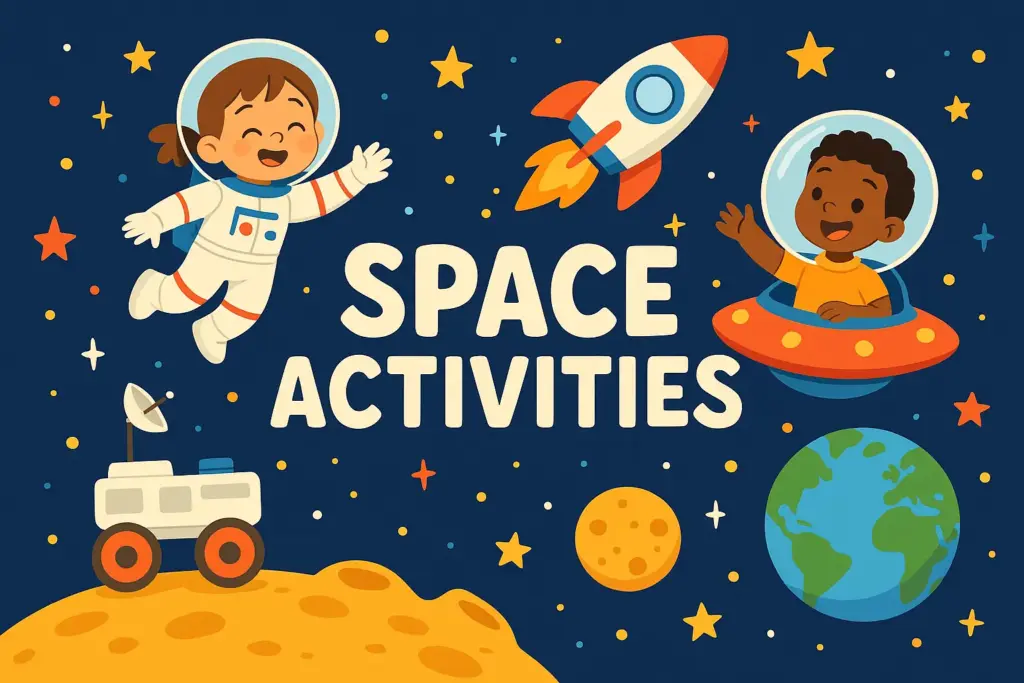
Blast off into learning with these exciting space activities for EYFS! From creating rockets to exploring stars and planets, these fun and imaginative activities spark curiosity while supporting key Early Learning Goals across all EYFS Areas of Development.
Ovivio’s Recommended Space Activities for Early Years:
Activity 1: Build a Junk Model Rocket
Provide recycled materials like cardboard tubes, foil, bottle tops, and boxes. Encourage children to design and build their own rockets to fly to space!
EYFS Areas of Development and Early Learning Goals:
- Expressive Arts and Design
- Creating with Materials: Children use different materials to design their rockets.
- Being Imaginative and Expressive: They role-play launching and flying their creations.
- Physical Development
- Fine Motor Skills: Cutting, gluing, and assembling the rocket develops coordination.
Activity 2: Sensory Space Tray
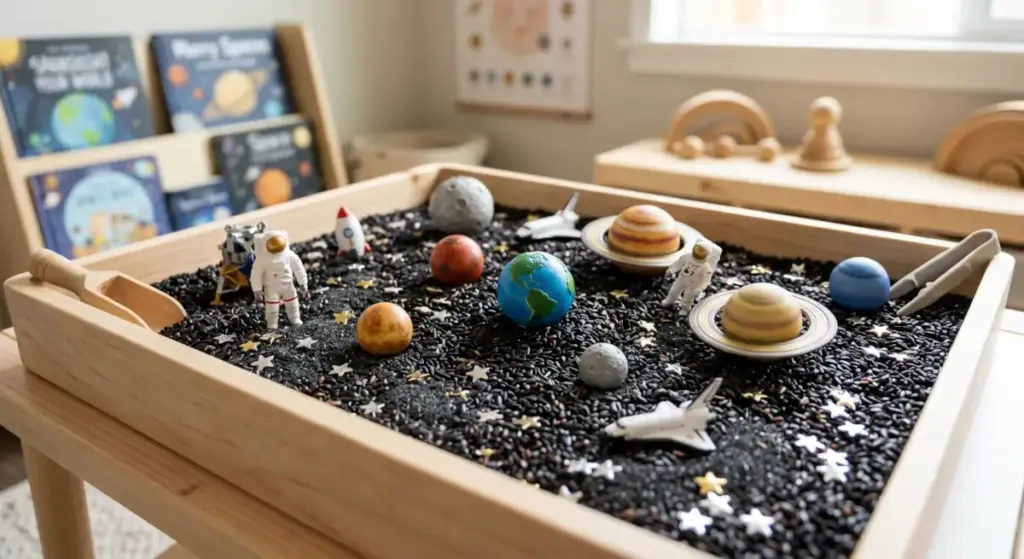
Create a space-themed sensory tray with black rice or sand as “space dust,” silver stars, small planet models, and toy astronauts. Let children explore and create their own space scenes.
EYFS Areas of Development and Early Learning Goals:
- Understanding the World
- The Natural World: Children explore textures and learn basic facts about space.
- Expressive Arts and Design
- Being Imaginative and Expressive: The sensory tray encourages storytelling and role play.
- Physical Development
- Fine Motor Skills: Scooping and placing objects refines hand-eye coordination.
Activity 3: Moon Rock Number Hunt
Wrap small stones in foil to look like moon rocks and hide numbers inside. Children can search for them, unwrap, and identify or order the numbers.
EYFS Areas of Development and Early Learning Goals:
- Mathematics
- Number: Identifying and sequencing numbers helps with number recognition.
- Numerical Patterns: Sorting rocks by number or size introduces early maths concepts.
- Physical Development
- Fine Motor Skills: Unwrapping and handling small rocks strengthens precision.
Activity 4: Create a Space Picture
Provide black paper, chalks, star stickers, foil, and coloured paper for children to create their own space scenes. Encourage them to include rockets, planets, aliens, and stars.
EYFS Areas of Development and Early Learning Goals:
- Expressive Arts and Design
- Creating with Materials: Children explore texture and shape through collage.
- Being Imaginative and Expressive: Drawing imaginative space scenes supports creativity.
- Communication and Language
- Speaking: Talking about their pictures encourages vocabulary development.
Activity 5: Astronaut Obstacle Course
Set up an indoor or outdoor obstacle course where children complete space missions -crawling through “tunnels,” jumping over “asteroids,” and landing on the “moon.”
EYFS Areas of Development and Early Learning Goals:
- Physical Development
- Gross Motor Skills: Jumping, crawling, and balancing improve strength and agility.
- Fine Motor Skills: Completing small tasks (e.g., pressing buttons on a pretend control panel) builds precision.
- Communication and Language
- Listening, Attention and Understanding: Following space mission instructions develops focus.
Activity 6: Read a Space-Themed Story
Choose books like Whatever Next! by Jill Murphy or How to Catch a Star by Oliver Jeffers. Read together and encourage children to act out the story or draw their own version.
EYFS Areas of Development and Early Learning Goals:
- Literacy
- Comprehension: Understanding the story through discussion and play supports sequencing.
- Communication and Language
- Listening, Attention and Understanding: Engaging with the story builds attention and focus.
- Speaking: Retelling the story enhances vocabulary and confidence.
Activity 7: Star Counting Game
Use star-shaped counters or stickers for a counting activity. Children can count stars, group them by colour or size, or use them to solve simple number problems.
EYFS Areas of Development and Early Learning Goals:
- Mathematics
- Number: Counting and solving problems using stars builds number skills.
- Numerical Patterns: Sorting stars introduces pattern recognition.
- Physical Development
- Fine Motor Skills: Picking up and placing small stars refines hand control.
Activity: Rocket Launch Role Play
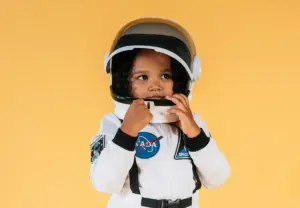
Set up a role play “space station” with astronaut helmets, control panels, and countdown timers. Children can take turns launching rockets and exploring planets.
EYFS Areas of Development and Early Learning Goals:
- Expressive Arts and Design
- Being Imaginative and Expressive: Pretend play as astronauts promotes creativity.
- Personal, Social and Emotional Development
- Building Relationships: Playing together encourages teamwork and sharing.
- Communication and Language
- Speaking: Acting out roles and communicating during pretend play develops language skills.
Activity 8: Make a Planet Mobile
Use card, paints, and string to make a hanging mobile of the planets. Talk about the colours and names of each planet while assembling the mobile.
EYFS Areas of Development and Early Learning Goals:
- Understanding the World
- The Natural World: Learning about the planets fosters curiosity about space.
- Expressive Arts and Design
- Creating with Materials: Making the mobile develops creativity and design skills.
- Physical Development
- Fine Motor Skills: Painting and assembling parts of the mobile enhance hand coordination.
These space activities for EYFS are out of this world! From building rockets and exploring sensory space trays to star counting and astronaut role play, these activities inspire wonder and creativity while supporting Early Learning Goals across all EYFS Areas of Development.
For UK nurseries and early years providers, space-themed learning is the perfect way to combine imaginative play with hands-on learning.
Ready for lift-off?