

The November 2025 update to the Ofsted inspection framework makes it clear that inspectors want to see how nursery leaders’ decisions impact children’s lived experience at your setting.
To get the full picture, inspectors use specific activities to gather first-hand evidence.
In this blog, we’ll unpick the 7 key activity types you’ll see in 2026, why they matter, and exactly what the inspector is looking for.
What does a nursery Ofsted inspection look like?
Following the updated Ofsted guidance brought in in November 2025, a group provider’s nursery inspection will typically be a one-day visit. The messaged underpinning all new Ofsted guidance is consistently one of collaboration and professional discussions.
The day before the inspection, you’ll have two calls. The first is the notification call and the second is the Ofsted planning call where you’ll share your self-reflection using the Early Years Inspection Toolkit.
The self-reflection discussions shape the inspector’s focus. You can prepare your team by keeping them calm and confident, ensuring they can chat naturally about their ‘intent, implementation, and impact’ (the 3I’s) of each evaluation area.
You can prepare your practitioners for the inspection visit in advance, the aim is not to teach them to jump through hoops for Ofsted. But to keep them calm and confident, ensuring they can chat naturally about their “intent, implementation, and impact” (the 3I’s) of each evaluation area.

Let’s look at the 7 common Ofsted inspection activity types that nurseries can expect in 2026.
1. The notification call and planning call
The inspection officially starts the day before the on-site activities. If it’s a regular visit, you’ll usually get a call by 10am the day before.
Schools are often called on a Monday (or Tuesday following a bank holiday), whereas nursery and childcare providers can be inspected on any day.
Defining your contextual background
A major shift for 2026 is the focus on your contextual background. The inspector will gather data about your community.
They’ll already have some information from your previous inspection history, but they’ll likely ask questions about local deprivation, EAL and SEND numbers, and how many children access EYPP to help them build a bigger contextual picture.
Why your nursery story matters
The inspector wants to see your nursery through your lens. If you’re in a disadvantaged area, how is your EYFS curriculum tailored to those specific needs? You’re the expert on your community, so use this call to explain how you serve it.
2. Checking the statutory foundations
While the focus has shifted to leadership choices, inspectors still need to check the statutory non-negotiables to check you are compliant and meet all of the requirements set out in the EYFS Statutory Framework.
The Single Central Record (SCR)
Expect an early check of your SCR to ensure all staff have current DBS checks. They’ll also look at Paediatric First Aid certificates and child attendance logs.
Keeping your evidence simple
You don’t need to create specific folders of information just for Ofsted. You’re actively encouraged not to create anything you don’t use in the normal management of your nursery.
Just show your inspector the systems you use daily to stay EYFS compliant.
We know that when Ofsted inspects EYFS safeguarding, they’ll look at child attendance, but more importantly, the processes and systems you have in place should a child’s absence cause concern.
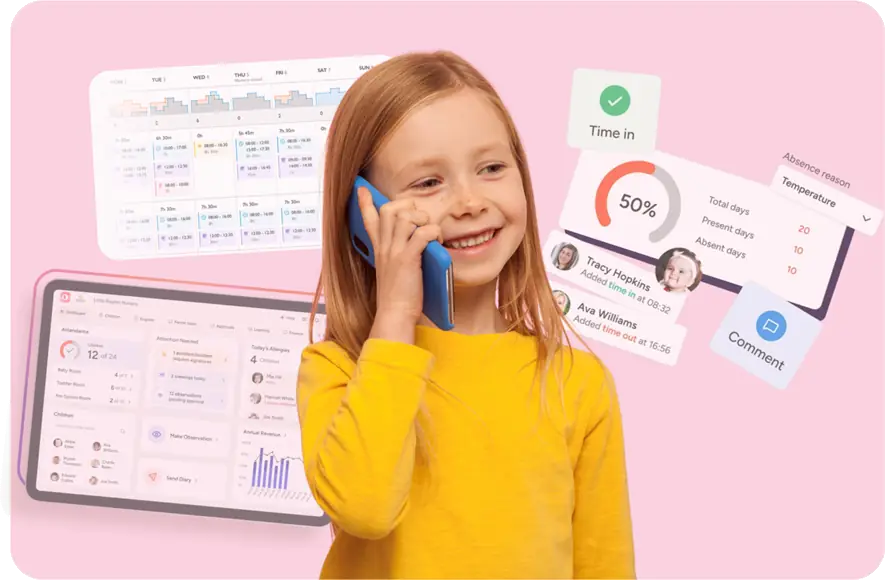
Having this data easily accessible in your nursery management software makes these discussions much smoother.

3. Professional dialogue and staff well-being
Throughout the day, the inspector will have short, informal chats with your team. These conversations underpin almost all their evidence gathering.
Checking on staff mental health
The 2026 framework specifically prioritises staff well-being. They’ll ask practitioners if they feel supported and how you manage their workload. They want to see a sustainable working culture.
They’ll also check in on you as the nominated individual. Ofsted knows inspections are stressful, and even though they’ve committed to a ‘done with, not to’ approach, even smooth inspections naturally bring stress and worry with them.
Don’t be afraid to be honest about how the day is going. The inspector will be looking for a healthy, transparent leadership style.
4. The joint observation and reflection
The joint observation is a vital leadership activity. You and the inspector informally watch a practitioner or an activity together. You can also suggest which activities to watch to better explain your leadership reflections.
Assessing your monitoring skills
Afterward, you’ll have a professional discussion to see if you’re both on the same page. It isn’t a test, the inspector wants to see if your view of “daily life” in the nursery matches theirs.
Supporting staff development
They’ll want to know how you help your team (including apprentices) progress. By chatting with your team, They can get a picture of if they feel mentored and supported, whether that comes from a tailored CPD plan or mentoring.
Well-planned staff development will span from new starters to experienced room leaders.

5. Case sampling and inclusion focus
You’ll have heard the term case sampling used in the updated guidance. It involves the inspector choosing a group of children (usually from vulnerable groups) to follow their journey through your setting.
Exploring inclusion at your setting
Inclusion is a standalone evaluation area now. The inspector will look at how your team identifies additional needs and works with your nursery’s SENDCo.
Even if your setting isn’t diverse in ethnicity, additional needs or faith, they’ll look for how your EYFS curriculum gives children experiences for depth and understanding about the wider world.
Having quick access to digital Child Profiles makes identifying children in multiple vulnerable groups much easier during the planning call.
6. Shared observations
The inspector will spend sections of their day in the rooms with your practitioners and children, known as ‘shared observations’. They’re looking for high-quality interactions that build on the seven areas of learning.
Capturing teachable moments
They’ll watch how staff extend vocabulary using communication and language activities, and how they develop the prime areas through play.
This is where the impact of your leadership choices becomes visible. They’ll also observe routines like snack time or drop-offs to see how safeguarding remains a priority during busy transitions.
Evidence of progress
They might ask a key worker about a child’s starting point and their current targets. Your team doesn’t have to recite this from memory. You practitioners can absolutely use your EYFS tracking software to show examples of progress and recorded observations.

7. Hearing the voice of the child
A core part of the 2026 inspection process is to gather evidence and understanding of what it’s like to be a child in your nursery. This is an ongoing activity that happens throughout the day.
Talking with the children
The inspector will spend time watching and sometimes talking to the children. They want to see if the children are happy, settled, and curious. They will listen to what the children have to say about their day.
Assessing well-being and engagement
They’re looking for those strong bonds between children and their key workers. The goal is for this to feel natural. They want to see your nursery culture through the eyes of the little ones, confirming that they feel safe and valued.

Preparing for your Ofsted inspection with confidence
Effective preparation for a nursery Ofsted inspection isn’t about rehearsing answers to possible questions. When you practitioners are well prepared, they’re able to talk naturally about the amazing experiences the children enjoy whilst in your care. Celebrating behind the scenes systems you use make them happen.
While EYFS Ofsted inspections are rigorous, having your data, funding information, and child development and progress stored in one accessible place lets you focus on what really matters: the professional dialogue and your passion for early years.
If you’d like to learn more about Ovivio features (formerly Blossom Educational), get in touch with our friendly customer support team to book a free demo.
Book an Ovivio demo: