


No matter how well you know your nursery setting, when you get the Ofsted call, it’s likely you might shrink a little.
Even with increased transparency in the Ofsted process, inspections are a big deal for everyone working in the setting.
The notification call is your first touchpoint with the inspector, but the planning call is where the first questions are asked and where the focus areas and timetable for inspection day start to take shape. This guide breaks down what happens across the three parts of the early years planning call and includes a handy prep checklist to remind you what information you’ll need.
What is the Ofsted planning call, and when does it happen?
For a routine early years inspection, under the updated Ofsted framework, there are three key steps that happen the day before the inspector arrives:
- The notification call
- The post-notification email
- The planning call
Ofsted notification call Vs planning call
The notification call
The notification call is the short first call that tells you the inspection will take place and confirms the basics, including who will attend the planning call.
Immediately after this call, Ofsted sends a post-notification email asking the nominated individual to gather key information about the setting, ready for the planning call, including information that helps identify key groups of vulnerable children.
The planning call
The planning call is the longer video call (if video is possible), it’s later on the same day as the initial notification call. It’s where the inspector builds a clearer picture of your context and begins shaping the inspection timetable and focus areas, informed by leaders’ self-reflection using the Early Years Inspection Toolkit.
Ofsted encourages leaders to have someone present to assist and support them, and where a nominee has been appointed, the nominee should attend all calls.

When does Ofsted call?
The notification call window varies by provider type, so there is no universal ‘Monday-only’ rule across early years and schools. We’ve scoured all Ofsted documentation about the updated inspection framework (in force from November 2025) to clarify when each provider type can expect their Ofsted call.
Group provision and nurseries
For organisations like nurseries and pre-schools, you’ll usually get a call by 10 am on the working day before the inspection starts. The nursery Ofsted call can be any day of the working week from Monday – Friday (although it’s less common to have a notification on a Friday for a Monday inspection, it can happen).
Schools
For routine school inspections, the lead inspector usually calls between 9.30 and 10 am on a Monday. Schools may receive a call on a Tuesday morning if it follows a bank holiday, or in the first week after the Christmas or Easter holidays. Early years settings attached to schools fall under the school inspection structure. The inspector will use the Early Years Inspection Toolkit to evaluate the provision, rather than the School Inspection Toolkit.
Childminders and other providers
Childminders and providers that do not operate regularly may be called up to 5 working days before inspection to confirm operating days and that children will be present.

The three parts of the Ofsted planning call
The planning video call lasts around 30 minutes (school inspection planning calls are longer, around 60-90 minutes). There’s a lot to cover in the planning call, so it helps to know the three parts in advance and what typically falls under each.
- Part one: introduction and practicalities
- Part two: nursery context and leader priorities
- Part three: planning the nursery inspection timetable
Part one: introduction and practicalities
Part one is the logistics section. It’s where the inspector confirms practical details and ensures the inspection runs smoothly for everyone involved. You can expect questions and checks, including:
- Who is on the call and what their roles are
- A reminder of the expected professional code of conduct on both sides
- A quick wellbeing check and who is responsible for the day-to-day wellbeing of the nominated individual (person who will be the main contact throughout the inspection, usually nursery manager)
- Any reasonable adjustments or adaptations needed for inspection activities, so that no staff or children are put at a disadvantage
- Practical reminders, such as parent notification and displaying the notice of inspection
- A chance to clarify anything before the inspector arrives the next day
It’s worth keeping the earlier requested information close to hand during part one. You’ll want to move through the practical logistics-based questions and checks quickly and spend more time on the discussion about your nursery context in part two.
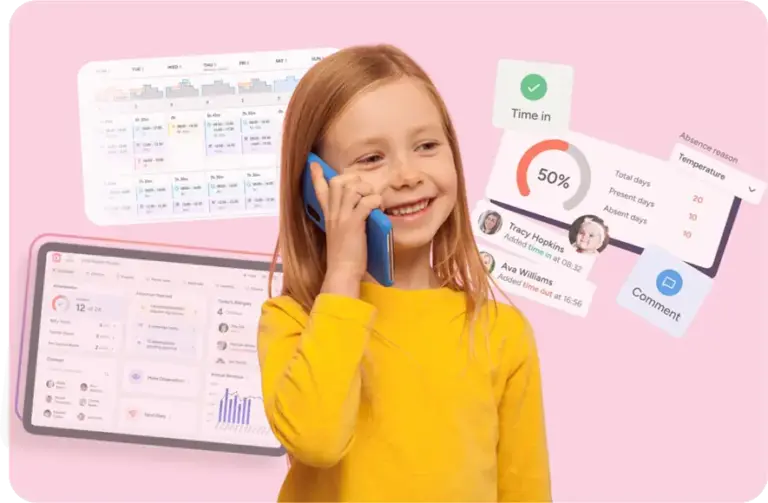
Nursery management software platforms, like Ovivio, that have child profile details, staff qualifications, and key records like medical information and attendance tracking in one place, help you access what you need quickly without breaking the flow of the call.

Part two: nursery context and leader priorities
Part two is where the inspector builds a fuller picture of your nursery, based on the information they already hold and what you can add as leaders. This is also where you’ll be asked for your view of where the setting currently sits across the evaluation areas, including how you think you align with the new 5-point scale.
The aim is for your inspector to understand your context, the needs of your children (and community), and the impact of the systems and decisions you’ve put in place. Inspectors will pay particular attention to how your provision supports children who may need more support to achieve, thrive and belong in your setting.
Topics that are often covered in this part include:
- Your setting context and anything that has changed since the previous inspection, including pressures in the local community
- Relevant safeguarding issues leaders are aware of, including concerns or allegations about adults
- Your current priorities and challenges, what you’ve done about them, and how you’ve checked whether it’s working
- Strengths and priorities for improvement, including your view of where you sit across the evaluation areas on the 5-point scale
Some nursery leaders have found it useful to structure their responses using the 3 I’s approach, breaking down each evaluation area into your intent, implementation and the impact you can evidence. If you already track child development, first aid administrations, and keep your nursery daily register in one place, it’s much easier when your day-to-day information is already organised, so you can focus on the conversation instead of hunting for details.

Part three: planning the nursery inspection timetable
Part three of the planning call is where you and the inspector agree on how the inspection day will run and plan which Ofsted inspection activities are likely to take place when. The aim is to identify when the nursery staff responsible for particular roles (like SENDCo) are available for professional discussion with the inspector.
It’s important that your daily running of the nursery is the priority during the inspection, especially if that team member is needed for ratio.
There are Ofsted inspection activities that will be planned into the visit timetable, they’ll give the inspector the chance to:
- Meet the designated safeguarding lead (DSL)
- Meet the member of staff acting as SENCo
- Meet those responsible for nursery leadership and talk further on your priorities and how you know what you do is working
- Speak with parents to gather their views
- Explore the rationale and strategy behind using allocated EYPP funding
- Review DBS records and safer recruitment procedures (this will be one of the first inspection tasks)
The inspector will also use part three of the planning call to explain how they’ll gather first-hand evidence during the day, including through shared observations and by looking more closely at the experiences of children identified for case sampling. The inspectors will tell leaders the names of the children they have chosen for case sampling when they arrive on site. This list may be added to depending on the direction the inspection takes on the day.

Planning call prep checklist for nursery leaders
There are a number of Ofsted documents you’ll need easy access to for your nursery inspection. We’ve collated a checklist designed to help you move through the planning call calmly, helping you to prepare confidently and avoid last-minute scrambles:
- Know the difference between the two Ofsted calls
- Have the requested setting facts ready to hand
- Numbers on roll and age range
- Operating times
- Staff numbers and qualification levels
- Numbers of children in key groups, including children with SEND and children receiving funding such as EYPP and DAF
- Decide who will join the planning call
- For group settings, have at least one other person present who can discuss the content and support you, which may include the nominee
- Be ready for the context and priorities conversation
- Share what has changed since your last inspection, and any current pressures affecting children and families
- Your current priorities and challenges
- What you have done about them and how you assess impact
- Your view of strengths and priorities for improvement, including where you think you sit across the evaluation areas on the 5-point scale
- Know who will speak for key areas on the day
- Safeguarding lead
- SENCo where relevant
- Leaders and practitioners responsible for key areas and children
- Know where the early checks evidence lives
- Paediatric first aid arrangements
- DBS evidence and safer recruitment checks, which are often prioritised early
- EYPP funding rationale and how you believe it supports children
- Prepare for case sampling
- Identify children who are disadvantaged, including EYPP, have SEND, are known or previously known to children’s social care, or face other barriers to learning or wellbeing(or highlight them using your nursery management software)
- Expect the sample to be agreed on arrival and to change if needed during the day
- Think about how parents’ views might be gathered
- Be ready to discuss how the inspector can speak with parents or gather their views. If you use a parent app or central messaging tool, sharing the Ofsted parent survey quickly can be helpful. They may also chat to parents during drop-off and pick-up times
- If a concern comes up during the process
- Raise it as soon as possible with the inspector, so it can be addressed during the inspection, where possible, there are escalation routes if needed

The planning call is your chance to set the organised tone for your nursery inspection. It helps the inspector understand your nursery’s context, hear your view of what’s working and what you’re improving, and agree on a timetable that fits the reality of an average day in your setting.
The pressure of performing from memory reduces when you have the useful information, the key people primed and ready and a clear picture of where your nursery sits ahead of the call. If you like to stay up to date with Ofsted updates, best practice tips and advice on all things early years, subscribe to our blog and get your updates straight to your inbox.