



















If you grew up in the 90s, you’ll probably remember playing out until the streetlights came on, with a Tamagotchi waiting at home for when you finally came inside. Childhood had a foot in both worlds back then, and the outdoor half usually won.
The rhythm of childhood looks different now than it did when you were growing up. Busier roads, family lives, and the pull of screens for entertainment mean more of children’s free time is spent indoors and sitting still.
Nursery is often where children get long, unhurried stretches outdoors, giving outdoor learning in the early years more weight than ever.
In this blog, we look at how EYFS outdoor learning can be intentional, so the hours children spend learning outside have a clear developmental purpose while they keep the freedom and fun that make outdoor play what it is.
How was this article written?
Louise Jackson, Ovivio’s early years content writer, wrote this article. She specialises in early years content and works from trusted sources so nursery managers get information they can rely on.
It’s written for nursery managers and practitioners who already value outdoor learning and want their outdoor learning provision to be intentional, without losing the freedom of outdoor play. It isn’t a guide to the space itself. Our ideas for creating an outstanding EYFS outdoor area on a budget cover that, and our guide to EYFS activity ideas for nurseries has plenty to take outdoors.
When writing this blog, we drew on:
- The DfE EYFS statutory framework
- Ofsted’s Early Years Inspection Toolkit
- Development Matters (DfE’s non-statutory EYFS curriculum guidance)
What is outdoor learning, and how is it different from just being outside?
Outdoor learning is outdoor play with a purpose behind it. Children lead the play, and the space, routine and adults around them are set up to support their development. In EYFS, it covers all seven areas of learning.
From a distance, outdoor learning and outdoor play in the early years can look identical, but there’s a clear difference. When outdoor time is intentional, practitioners know what the space invites children to do, which skills are likely to come up, and what to listen and watch for.
Knowing all that doesn’t mean the adults take over. The thinking happens before children head out, so they can still follow their own ideas once they’re outside.

Why is outdoor learning so important in the early years now?
The benefits of outdoor learning go further than fresh air and burning off energy. Outdoors, children’s bodies get important input from sensory play that’s hard to recreate inside a nursery room, and it feeds into regulation, attention and readiness to learn.
- Vestibular input comes from the balance system in the inner ear. Spinning, swinging, rolling down a slope and walking on uneven ground all give it a workout.
- Proprioceptive input comes from muscles and joints. Pushing a loaded wheelbarrow, digging, climbing and carrying heavy things tell children where their body is in space.
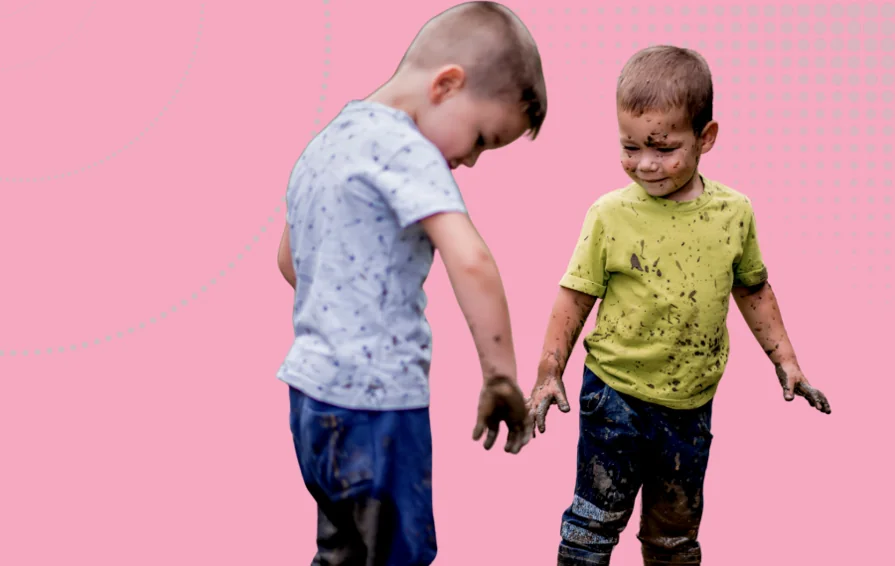
- Tactile input comes through the skin, from mud, bark, wet grass, cold air and rain on their hands.
Movement and deep pressure help the nervous system settle, which is why many emotional self-regulation strategies used indoors try to recreate the feelings children get outdoors.
Screen-based entertainment keeps children’s eyes and ears busy but their bodies still, so they get half the experience, and the conversation only goes one way.
As more of children’s free time goes to screens, outdoor learning at nursery becomes one of the main places they get the whole-body movement and back-and-forth talk their development depends on.
What can you hear and see during outdoor learning that’s harder to catch indoors?
During EYFS outdoor learning, children talk, move, and play differently than they do indoors, so it helps to know what to tune in to.
Here are some examples of the types of learning you’ll see during outdoor play in your nursery:
Communication and language
- Child-to-child conversations. Adults fill gaps, guess at meaning and rephrase for children. Other children don’t, so outdoors children have to work harder to make themselves understood and to understand each other. Practitioners get the chance to join a conversation children started.
- Side-by-side talk while children dig or build often draws quieter children into the back-and-forth that communication and language activities in EYFS set out to build.
Personal, social and emotional development
- Negotiating shared space and resources without walls to define them.
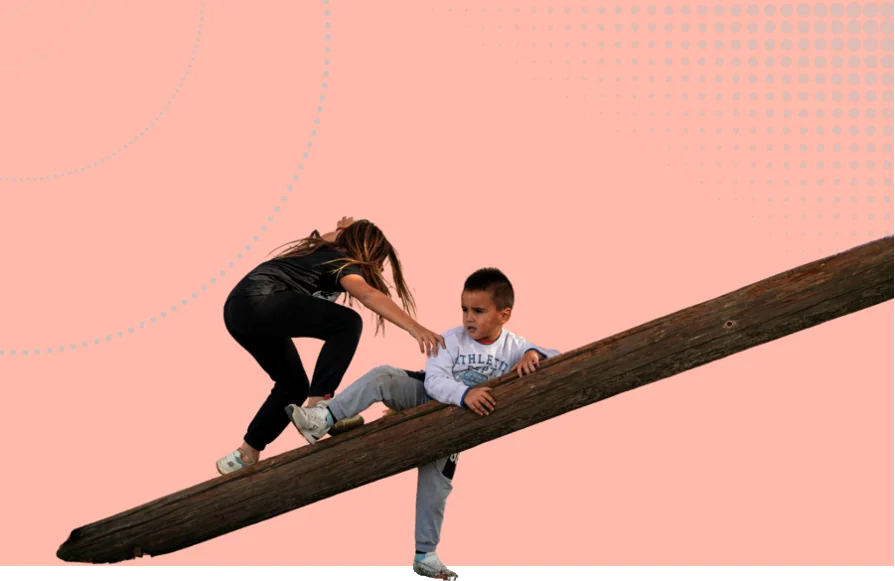
- Children judging their own risk as they decide how high to climb or how fast to go.
- Trying again when the den collapses, building the resilience at the heart of PSED in EYFS.
- Noticing what their own body needs, like feeling cold or tired, and doing something about it. That’s an early but important step in building independence.
Physical development
- Whole-body movement that builds the core strength, balance and coordination at the centre of EYFS physical development.
- Fine motor skills they need to make the fiddly adjustments necessary for their own outdoor creation or project.
Literacy and early maths
- Stories that grow out of play, as children invent characters and plots together. That spoken storytelling comes before the reading and writing in EYFS literacy activities.
- Spatial thinking at full size: climbing over, squeezing under and working out whether something will fit, all part of outdoor maths.
Understanding the world, and expressive arts and design
- Weather and seasons changing in front of them.
- A stick becoming a sword, a spoon or a magic wand, the kind of symbolic thinking expressive arts and design grows from.
How to build intention into your outdoor learning provision
Building more intentional outdoor learning provision is a gradual process. It develops as your team reflects on what children are drawn to and how outdoor learning can work as a pedagogy rather than ‘just’ time outside, helping remove children’s barriers to learning.
These three areas are a good place to start, whatever the size of your outdoor space.
Know what type of play your space invites
Every outdoor space, from large open spaces to a small yard, a daily walk to the park or woodland for forest school activities, invites some kinds of play more than others.
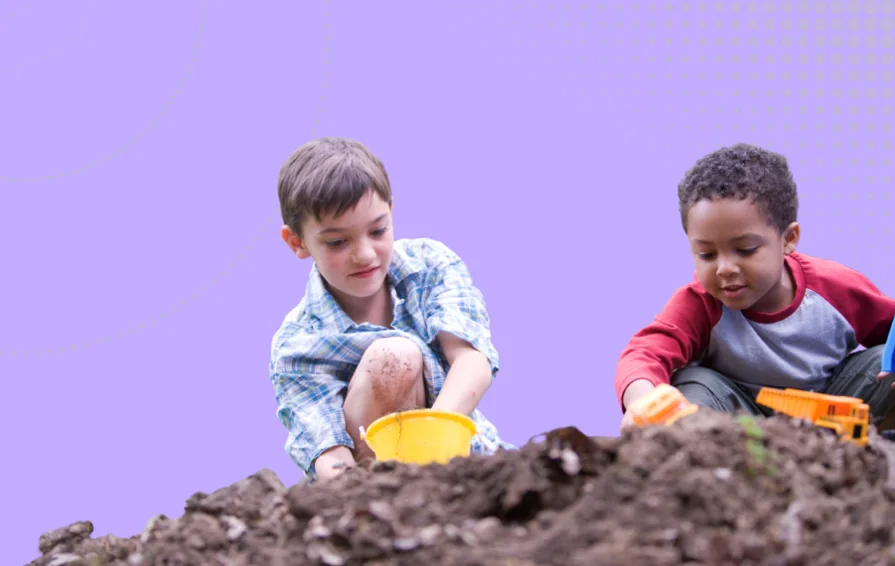
Think about what children can move, build and hide in, which is where loose parts play comes into its own, and which areas of learning that’s likely to bring out. Our ideas for an EYFS outdoor area on a budget show how far small changes can go.
Give children a rhythm they can rely on
When outdoor learning happens at predictable points in the day, and children are encouraged to use substitutions and initiative to get play moving, they stop waiting to be told what to do.
Agree the adult’s role across the team
When the whole nursery team understands their role in facilitating quality outdoor play, children get consistency with every practitioner. It’s a good topic for reflective practice in your next team meeting.
That role usually means:
- Observing before stepping in.
- Tuning in to child-to-child talk.
- Adding a word, question or resource that extends what children are already doing.
- Knowing when to stand back is what makes child-led learning work outdoors, and it’s how you keep the magic of outdoor play without over-structuring it.
How can you show that outdoor play is learning?
You don’t need extra paperwork to evidence quality EYFS outdoor learning. Under the September 2026 Early Years Inspection Toolkit, Ofsted want to see that your outdoor learning provision has a clear purpose and that your team understands it, which is the same message underpinning each inspection activity you’ll experience during their visit.
Ask yourself:
- Could every practitioner explain the intent behind your outdoor learning?
- Is outdoor learning captured in each child’s Learning Journal as often as indoor learning? The right types of EYFS observations let you record it without interrupting it.
- Where does outdoor learning sit in your EYFS curriculum, and is it part of how children learn or an extra?
At The Pheasant Nest, one of a handful of PVI nurseries to get exceptional for inclusion in 2026, children spend much of their day outdoors, learning purposefully while adults nurture them as they go.
Keep building your EYFS outdoor learning with Ovivio
Evidencing intentional outdoor learning is one part of showing inspectors how your whole provision works for every child. Our Ofsted hub for nurseries brings together everything from the Early Years Inspection Toolkit to the questions inspectors ask, so you can prepare your team with confidence.
For more EYFS guidance, Ofsted updates and practical ideas from early years experts, sign up to the Ovivio newsletter and get them delivered straight to your inbox.
Sign up to our newsletter for more great content like this!