

















The strongest inclusive nurseries design systems for inclusion not to fix a lack of skill, but to protect their team’s skill and scale the success it already brings.
It’s easy to assume a system is only needed where practitioners can’t reliably spot and reduce barriers on their own. And that a structured system would get in the way of those who already do this instinctively. But established nursery leaders know that’s not the case.
In this blog, we reframe the graduated approach in language your whole nursery team can use day to day, so you can design a system for inclusion that supports every child.
How this article’s written
Louise Jackson, our EYFS content specialist, wrote this article and brings over nine years of teaching and school leadership experience to everything she writes.
She specialises in early years content and works only from trusted sources, including the DfE, Ofsted, and government publications, so nursery managers get information they can rely on.
When writing this blog, statutory and non-statutory guidance were drawn on, including:
- Ofsted’s Early Years Inspection Toolkit
- The EYFS statutory framework
- The 2015 SEND Code of Practice
Inclusive by design
Inclusive by design isn’t a term that arrived with Ofsted’s new inclusion evaluation area. Nursery managers have used it for years to describe something that must be built strategically and not left to chance.
Design means giving your team a structured process to follow, one that lets practitioners use their natural skill and talent to identify a barrier and decide what to do about it. Allowing every child to achieve, thrive and belong in your nursery.
How designed structure achieved exceptional
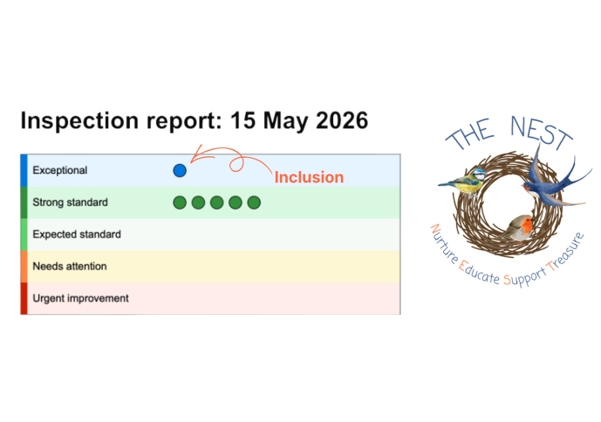
A strong system for inclusion is how Claire and James Nichols achieved the coveted exceptional grading for inclusion at their recent Ofsted inspection. Not through individual brilliance alone, but a system that made that brilliance repeatable across their whole team.
A designed system means inclusion is embedded in everything your nursery does, shaped by your own context: your community’s needs, your children’s needs, and the bigger national picture of SEND.
Designing a predictable system for inclusion
The design we’re about to walk you through follows the familiar graduated approach (set out in the SEND Code of Practice), we’re not reinventing anything for the sake of it.
Most practitioners know it from SEND support, used most often for children already on an SEND pathway. The cycle works effectively for embedding inclusive practice, so we’ve put it into language your whole team can use every day.
The SEND graduated approach uses this language:
| Assess | Plan | Do | Review |
We’ve adapted it slightly to align with EYFS, and to give your practitioners and your early years SENCo more support in the moment.
Our version for inclusive practice:
| Identify | Understand | Action | Evaluate |
We’ll walk through each stage with examples of what it covers in practice.
 Share this with your team or use it as the backbone for your next SEND-focused staff meeting, so everyone’s working from the same understanding.

Designing a system for Identifying
Relationships are the vehicle for quality inclusive practice, and identification of needs depends on them completely. It relies on every member of staff knowing a child well enough to notice when something’s ‘out of the ordinary’, beyond just the practitioner who happens to be their key worker.
Developmental stage, or unmet need?
This is one of the hardest calls in early years. A child’s tolerance window changes regularly depending on how well their physiological needs are being met at that point in time (tiredness, hunger, thirst, etc.).
Their tolerance to change, sensory feedback and interactions are impacted while they’re working through neurodevelopmental restructuring. This can make it hard to distinguish between ‘normal’ development and signs of deeper unmet needs.
The difference usually comes down to what’s ‘normal’ for that specific child, and that’s only visible to a team who know them well enough to spot when something’s off their baseline. A team of eyes builds a fuller picture faster than any one person could alone.
The identification process aims to stay curious about small clues instead of settling on the first or most obvious explanation.
How to identify unmet needs and barriers
- Keep an accurate log of changes in behaviours or skills
- Ensure all practitioners discuss children’s progress regularly, not only the key worker
- Liaise with families to build a bigger picture of their development at home
- Plan and deliver CPD to upskill practitioners on signs of different unmet needs
- Build practitioner schedules that leave time for observations, write-ups and discussion
- Prioritise building and strengthening relationships with every child
- Use a shared system, like a digital Child Profile, so information added can be viewed by selected team members

Designing a system for Understanding
Once you notice an unmet need or barrier, the next job is to work out what’s behind it. A behaviour on its own tells you very little, it’s just the starting point for finding out what’s really going on.
We’ve called this stage Understand, not Plan, like the language used in the familiar graduated approach. The term Understand focuses on building practitioners’ knowledge first and makes space to bring in external experts and agencies before jumping straight to planning support.
What sits behind the behaviour?
Is a child avoiding circle time because they’re tired, because the noise is too much, or because they’re not yet confident with a particular skill? Each answer points to a different response, and only one of them is about circle time at all.
This is where the 3 Cs of effective inclusive practice come in:
- Curious about what’s behind the behaviour
- Considered in exploring the need
- Consistent in how your team responds
That thinking, applied consistently, is what allows your team to identify unmet needs early on and act quickly.
Understanding the presenting needs, together
- Discuss patterns with your immediate room team as they emerge, not only at scheduled reviews
- Bring your manager and EYFS SENCo in early, before a concern has grown, not once it has
- Build relationships with trusted CPD sources to keep staff knowledge current
- Connect with a wider nursery network to learn from patterns other settings have already worked through
- Know which external agencies and experts to call on, and how to reach them quickly
- Hold regular, whole-team discussions about children’s progress, so understanding builds continuously

Designing a system for Action
Understanding the potential unmet need or barriers to learning tells you what’s going on, and Action is what a child experiences as a result. This is the stage easiest to evidence and talk about with an Ofsted inspector as part of their inspection activities.
Universal offer, or targeted support?
A child who needs a little longer to process a question, or a quieter corner to emotionally regulate before rejoining the group, can often be supported entirely within a strong universal offer.
A child with a more significant or persistent barrier needs something more deliberate: a targeted intervention, or a referral to specialist support beyond what your team can provide alone.
The strongest nurseries build a universal offer flexible enough to meet individual needs, and they do it by design, not by chance, moving every child’s support through the same four phases of the cycle: Identify, Understand, Action, Evaluate.
How to take effective action
- Build a universal offer strong enough to flex around most needs before a more formal support plan is required
- Give practitioners the reasoning behind a strategy, not only the steps, so that they can adapt it for a different child too
- Know your referral pathway for external agencies, and how quickly a concern should move along it
- Separate short-term support from longer-term skill-building in your planning, since they run on different timelines
- Record what adjustment was made and why, so it isn’t lost when a child changes rooms or a practitioner leaves
- Use a shared system, like a digital SEND pathway tracker

Designing a system for Evaluation
Effective inclusive practice balances exploration and evaluation. A constant process of questioning and curiosity that allows a practitioner to make small adjustments to support when they need. Although it’s technically at the end of the cycle, Evaluation happens at every stage of SEND support.
Evaluation tells you whether what you did reduced or removed the barrier in the short and long term, whether the unmet need has been understood and supported, or whether more investigation is needed.
Did it work, and would it work again?
A good evaluation asks two separate questions:
- Did this help the child it was for? (meeting unmet needs and removing barriers to learning)
- Would the same approach help a different child with a similar need?
Answering both honestly shows whether success can be repeated for other children facing similar barriers to learning and wellbeing. That’s what separates a designed system from an isolated SEND support success story.
How to evaluate impact
- Build review points regularly into your calendar as standard practice
- Use Cohort Tracking to see a child’s progress against their own starting point, keeping evaluation grounded in evidence
- Record what worked and what didn’t via a variety of observation types to build a full picture
- Check whether a strategy could help other children with a similar need, beyond the one it was designed for
- Feed what you learn back into training, so one success becomes the whole team’s practice
- Involve the family in reviewing progress with observations from home
Reduce nursery admin load with Ovivio
Understanding what a child needs comes from knowing them well, and that kind of knowledge is built in the everyday moments between practitioner and child.
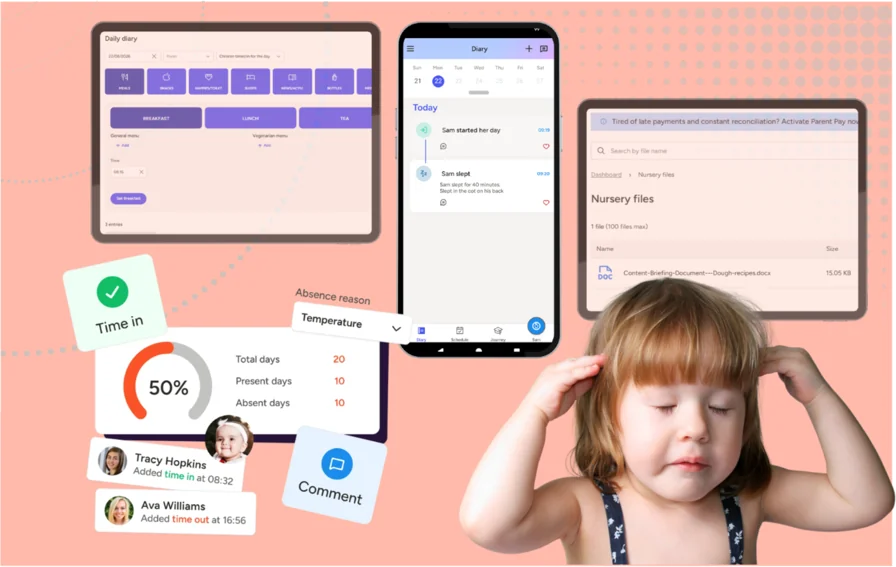
As we all know, admin can quietly take time away from those moments, hours spent logging observations and tracking progress that could otherwise go toward the relationships the whole system depends on.
Ovivio is a favourite for UK nursery managers for a reason:
- All information stored securely in one place, so nothing relies on memory or scraps of paper notes
- Visibility of staff planning and children’s progress across the whole setting
- Less time spent duplicating the same information across different systems
- Confidence that what’s recorded is accurate and current, for parents, for Ofsted, and for your own team
- More time freed up for the relationships that make inclusive practice work
- Alongside all the essential features every nursery manager needs, from invoicing and compliance to business reporting and forecasting
Contact the Ovivio team today and see for yourself how much admin time you and your practitioners could save.
Book an Ovivio demo: