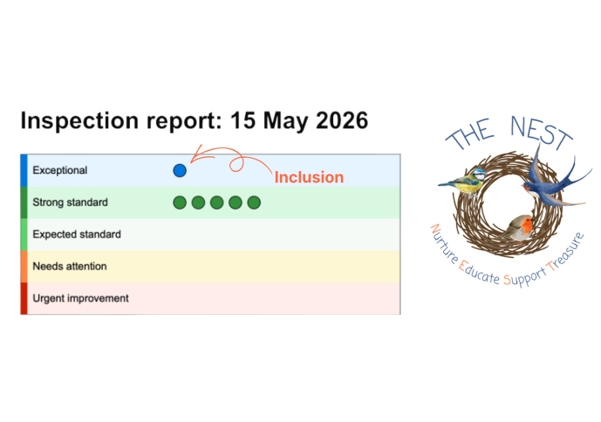










Inclusion isn’t a new concept, but the way Ofsted inspects it is. The strongest nurseries design inclusion to be predictable and non-negotiable for every child, so that when an inspector visits, they see the carefully designed systems in action.
In this blog, we share 37 questions you might be asked during an inspection, focused specifically on inclusion.
These questions are designed to spark conversation with your nursery team, because confident, consistent answers about what inclusion looks like in your setting show that it’s a priority for everyone.
How the questions were created
You may have arrived here from one of the blogs in our nursery Ofsted hub. We recently shared how one of our Ovivio users, The Pheasant Nest, achieved exceptional for inclusion, and that practice helped shape the questions in this article.
We’ve also drawn on the expectations and requirements for quality inclusion set out in:
- The 2026 updated version of the EYFS statutory framework
- Ofsted’s Early Years Inspection Toolkit (updated September 2026)
- The 2010 Equality Act
- The 2015 SEND Code of Practice
- The guidance for maintained schools on creating a robust inclusion strategy, written for schools rather than early years settings specifically, but still valuable to cross-reference
Before the questions themselves, here’s a quick recap of how Ofsted inspects inclusion in early years.
The EYFS inclusion judgement
When Ofsted inspects inclusion, their focus is clear: they want to know how you identify, support and monitor the progress of every child in your care, particularly disadvantaged children, those with SEND, those known to children’s social care, and those facing other barriers to learning and wellbeing.
On the day of your inspection, your inspector won’t just want to see your practitioners implementing effective inclusive practice. They’ll be looking for the strategic decision-making behind it.
Keep one question in mind as you read on:
How are you systematically supporting and prioritising inclusion in your nursery?
The important focus is on systematic design, meaning you have designed robust, thoughtful systems to ensure inclusion is a priority in your nursery. And with strong systems comes the ability to repeat good practice, ensuring inclusion predictably underpins each way of working at your early years setting.

37 Ofsted inclusion questions for nurseries
We’ve grouped the 37 Ofsted inclusion questions into 5 categories, useful discussion points to work through with your nursery team.
Tip: Save this blog and share it for whole-setting confidence and clarity.
The question categories are:
- Systems and processes that prioritise inclusion
- Identification and assessment
- Collaboration and consideration
- Implementation and delivery
- Evaluation and impact
Questions about systems and processes that prioritise inclusion
Having a system for inclusion means every member of your team follows the same roadmap: spotting a barrier, deciding on the right support, and checking it’s worked, rather than relying only on their individual instinct.
- What systems do you have in place to ensure children who are statutorily supported (DAF, EYPP, LAC, etc.) achieve positive outcomes?
- How do you identify possible barriers to children’s learning, wellbeing and development? How do you know this approach is effective?
- How do you use tracking and monitoring systems to highlight children falling behind their peers?
- How do you ensure the Graduated Approach (assess, plan, do, review) underpins all SEND support in your setting?
- How do you make sure your practitioners are trained to support changing SEND needs?
- How are relationships prioritised across the nursery?
- How does your nursery team know when to seek external professional support to meet a child’s needs?
Examples of systems and processes that prioritise inclusion in EYFS
- Key worker system structure
- Relationships are a setting priority, including with families
- Visibility of cohort progress and monitoring
- Inclusion strategy* highlights common barriers and how to remove them
- Whole-setting system for assessment and EYFS observations
- Planned CPD sessions to upskill practitioners’ SEND knowledge
- Use of proposed DfE SEND CPD programme (planned to be launched in Autumn 2027)
- Effective relationships with all children, knowing their ‘normal’
- A strong culture of safeguarding and collective responsibility
- An effective early years SENCo with systems for working with parents, practitioners and children
- An external network of experience and expertise, used to build knowledge of best practice from similar settings
- Systems designed so inclusive practice is the predictable outcome
*Inclusion strategies must be published for schools – linked to how they spend the Mainstream Inclusion Funding. PVI settings don’t require one, but it’s good practice.

Questions about SEND identification and assessment
Effective identification and assessment notice changes or gaps early and pinpoint the next action to take.
Confident nursery practitioners can recognise that a need may present differently depending on a child’s age, developmental stage, and gender. The strongest inclusive nurseries work towards building a picture of need together rather than relying on one key worker’s view.
- How do you know when a child’s progress reflects typical development, rather than an emerging need that requires support?
- How confident is your team in recognising that a need can present differently in younger children, and differently in boys and girls?
- What’s your process for deciding when a need can be supported internally, and when it needs external professional input?
- How does your SENCo access support and advice beyond your own setting?
- How do you involve parents as soon as you notice a possible barrier to a child’s learning or wellbeing?
- How do you choose which interventions to use, and how do you know they’re backed by evidence?
- How do EYFS observations get used as ongoing assessment across your whole team, not just recorded by a child’s key worker?
- How does your team stay curious about the underlying unmet need behind a behaviour?
Examples of effective identification and assessment in practice
- Staff CPD covering how common SEND needs present differently by age and by gender
- A clear, known pathway for escalating a concern to the SENCo
- SENCo access to a wider professional network
- Parents involved as soon as a possible need is noticed
- Use of evidence-based interventions, drawing on resources like the EEF Early Years Toolkit
- Whole-team input building a child’s developing picture
- A consistent, curious approach to the why behind a presenting behaviour

Questions about collaboration and consideration
Collaboration and consideration make sure a child’s support doesn’t rely on a single conversation or on one person holding all the information.
Achieved by regular conversation between practitioners about how every child is progressing, open channels between staff and parents that catch small concerns before they build, and your early years SENCo working alongside external professionals effectively.
- How regularly does your team talk to each other about how individual children are progressing, and is this built into your weekly working rhythm?
- What channels do parents have to raise a small concern before it grows, and how quickly does that reach the right person?
- How are parents given an active voice in decisions about their child’s SEND support
- Is the CPD your staff receive also shared with parents, so the wider adults around a child have the same knowledge?
- How does your early years SENCo work alongside external professionals on an ongoing basis?
- How accessible and high-quality is your universal offer, so it meets most children’s needs as standard?
- What do you do to learn from and share practice with other settings committed to best practice in early years?
Examples of collaboration and consideration in practice
- Regular, built-in team discussions about each child’s progress
- A parent communication channel, like Ovivio’s Parent App, that surfaces small concerns early
- Parents included as active voices in SEND support decisions
- CPD content shared with parents alongside staff
- A strong universal offer that meets most children’s needs without requiring targeted intervention
- Active links with other settings to learn from and share best practice

Questions about implementation and delivery of inclusive practice
You’ll know this section as the ‘doing’ part of the Graduated Approach, and it’s often what inspectors see directly: support, scaffolding, or intervention carried out in the moment or specifically timetabled.
- How consistently is support delivered across your whole team, and could practitioners explain why?
- What micro-adjustments help every child participate in the moment?
- How do you support a child’s communication and language needs at their current development stage?
- How do you build relationships strong enough for children to try, fail and try again?
- How well does your universal offer meet children’s needs, and how well do practitioners know how each child learns best?
- How do you tell the difference between a short-term support need and a longer-term skill still being built, such as PSED and self-regulation?
- How do national SEND trends and your community’s needs shape daily interactions?
- How do you use observations without pulling attention away from the children in front of you?
Examples of implementation and delivery in practice
- Consistent delivery of support across every practitioner
- In-the-moment adjustments that let every child participate and learn
- Communication and language support matched to each child’s current development stage
- Strong, trusting relationships that give children confidence to try new things
- A universal offer strong enough to meet most needs as standard
- A clear line drawn between short-term support and longer-term skill-building, such as PSED and self-regulation
- Awareness of national SEND and local community needs shaping daily interactions

Questions about evaluation and impact
This is where Ofsted looks at your nursery’s leadership and governance and the strategic decisions behind what you do.
They’ll want to know why your practitioners support children in a particular way, and whether that comes from a carefully planned system that could work just as well for a different child or a different need.
You might know this as the ‘review’ stage of the Graduated Approach, and it shows up both in small, in-the-moment checks and in wider team discussions and reviews.
- How do you review the SEND support each child receives, particularly for the groups Ofsted focuses on: disadvantaged children, those with SEND, those known to children’s social care, and those facing other barriers?
- How do you effectively track a child’s progress, learning journey and support journey, and how well are barriers to learning being removed?
- How do you know that your most vulnerable children have the same opportunities and experiences as their peers?
- What signs tell you that your nursery’s provision for inclusion is growing, and what are your plans to build on it further?
- How do you share your good inclusive practice with the wider community, such as feeder schools or parents?
- How do you ensure consistency of approach and provision across your whole team?
- How can you be confident that your efforts are working and that they could be repeated with a different child?
Examples of evaluation and impact in practice
- Regular planned whole-team discussions about every child’s progress
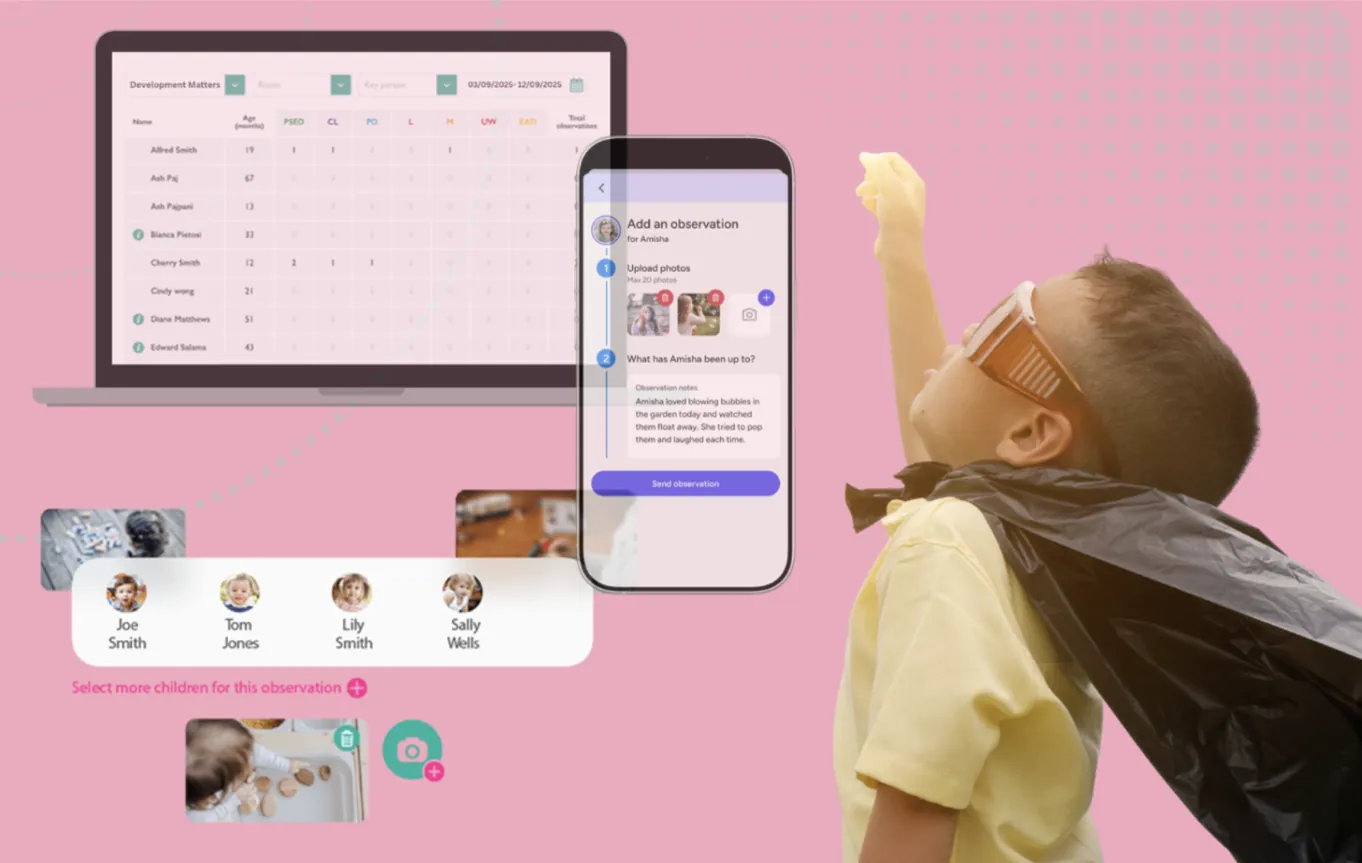
- Digital EYFS tracking systems designed to reduce administrative load
- Purposeful discussions about the essential experiences and opportunities each child should have whilst at your setting
- An inclusion and EYPP strategy that demonstrates your bigger plans for whole-setting inclusion
- Strong and growing links with the wider community, sharing your good practice with the wider system of early years
- Peer-support systems focusing on inclusive practice (the 3C’s of inclusive practice can help here)
Building a system that works for inclusion
Creating a system that means inclusion is a predictable strength of your nursery means being deliberate about each stage of inclusive practice:
- How a need first gets noticed
- How your team builds a fuller picture of understanding
- How support gets applied
- And how you check it’s working
Knowing what exceptional inclusion looks like is one thing, but building a system that delivers inclusive practice consistently is the sign of a strategic nursery.
Inclusion is one part of running a nursery well
Every question in this guide points to the same underlying skill: designing a strategic system with the children’s outcomes and progress at the centre.
That skill doesn’t stop at inclusion – it includes staffing, safeguarding, curriculum, finances and the admin processes needed to tie it all together.
Our complete guide to nursery management covers: structuring your setting, leadership, inspections, safeguarding, curriculum, staffing, marketing, finances, parent communication, and how to reduce the admin load nursery managers carry.
You can download your free 2027 nursery managers’ guide here.
Sign up to our newsletter for more great content like this!